
Introduction
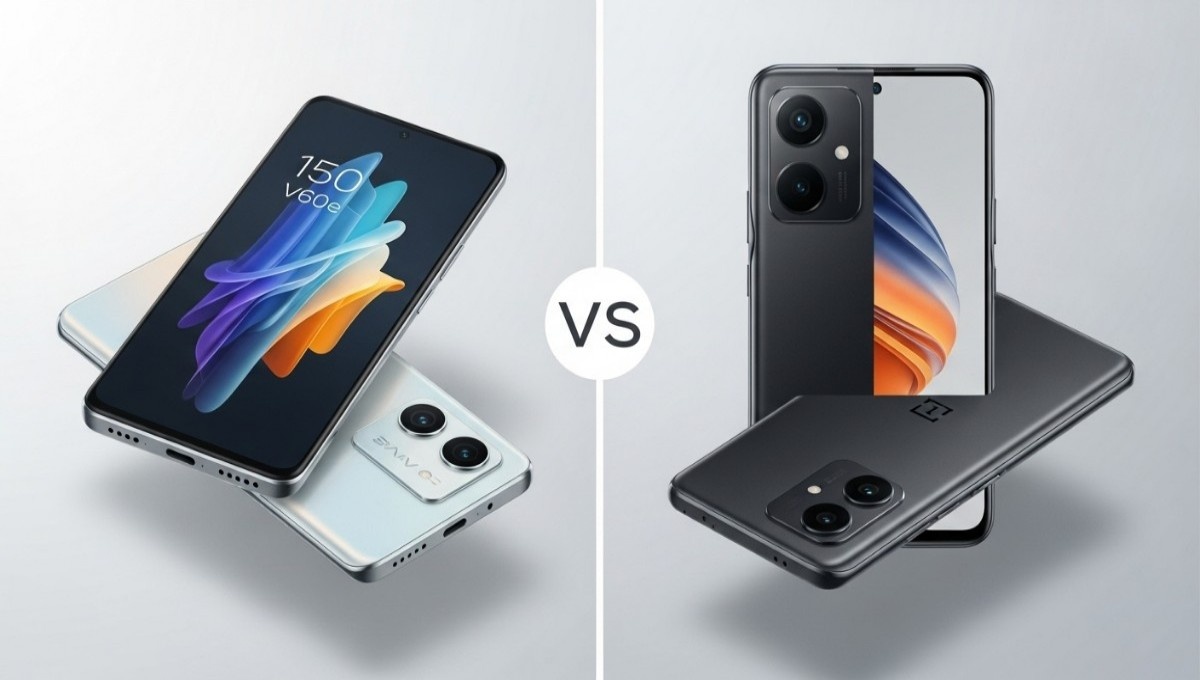
If you’re shopping for a sub-₹30,000 smartphone with a strong camera setup, you’re likely considering options like the Vivo V60e and the OnePlus Nord 5. In this comparison, we dive deep into the camera performance of Vivo V60e vs OnePlus Nord 5, drawing insights from side-by-side samples and real-world usage. We examine primary and wide lenses, zoom capabilities, video recording, portrait modes, low-light behavior, and more — to help you decide which phone deserves your pick.
Camera Specifications at a Glance
Before we get into comparisons, here’s a quick spec snapshot:
| Feature | Vivo V60e | OnePlus Nord 5 |
|---|---|---|
| Primary Rear Camera | 200 MP (sensor size ~1/1.56″) | 50 MP (same sensor size) |
| Ultra-wide Camera | 8 MP | 8 MP |
| Front (Selfie) Camera | 50 MP | 50 MP |
| Video Recording (Primary) | 4K @ 30 fps | 4K @ 60 fps (and 30 fps) |
| Zoom | Digital zoom only | Digital zoom only |
| Portrait Modes | 1×, 2× digital zoom | 1×, 2× digital zoom |
With that, let’s dive into how these cameras stack up in real use.
1. Primary (Rear) Camera: Daylight Performance
When comparing Vivo V60e vs OnePlus Nord 5 in daylight, some clear distinctions stand out:
- Shadow Recovery & Dynamic Range
OnePlus Nord 5 handles shadows more effectively, keeping them from turning overly dark. Vivo, in contrast, sometimes lets shadows dip too much.
At the same time, Vivo often has better control over highlights — bright areas are less blown out compared to Nord 5’s occasional overexposure. - Sharpness and Detail
The Nord 5 generally produces sharper images. The images from the V60e come off as a bit softer in comparison. - Color, Vibrance, and Saturation
OnePlus Nord 5 leans toward slightly more vibrant, saturated color renditions — which many users favor for social media use. Vivo’s output is more neutral or subdued, which can look more natural but less punchy. - Noise and Texture
In shadow regions (like behind foliage or dim spots), the V60e tends to show noticeable noise, while Nord 5 keeps edges cleaner and detail more consistent. - Face / Skin Tone Rendering
Nord 5 often processes skin tones a bit warmer and sharper, giving a more “finished” look. Vivo’s skin tones come off more natural and less processed, but sometimes appear flatter or less striking.
Verdict for Daylight: Nord 5 tends to be the safer bet for lively, sharp images. But if you prefer more natural tones and better highlight control, V60e has its merits.
2. Low-Light & Night Performance
In low-light scenarios, the strengths shift a little:
- The V60e often outperforms Nord 5 in exposure retention and dynamic range in dim conditions. That said, noise becomes more evident, so fine detail suffers.
- Nord 5, while not perfect in low light, keeps noise in check better and maintains sharper edges under low light.
So when the sun goes down, Vivo V60e vs OnePlus Nord 5, Nord 5 is typically more reliable, especially where crispness matters more than preserving every shadow detail.
3. Digital Zoom (2×) Comparison
Vivo V60e vs OnePlus Nord 5 Neither phone has an optical zoom lens; both rely on digital cropping. In Vivo V60e vs OnePlus Nord 5 tests:
- At 2× zoom, Nord 5 retains more clarity overall, especially for faces and edges.
- Vivo attempts better highlight control in zoomed shots, but sometimes introduces over-sharpening effects or odd tints.
- In challenging light, Nord 5’s processing keeps things more usable; V60e’s output can get soft or tinted in challenging zones.
4. Ultra-Wide Camera
The ultra-wide cameras (8 MP each) reveal more surprising differences in the Vivo V60e vs OnePlus Nord 5 matchup:
- Edge Sharpness
Nord 5 delivers much sharper edges. Vivo’s ultra-wide often softens heavily at the edges. - Noise & Tint
Vivo shows noise in shadows and odd magenta tints in dim zones. Nord 5’s output is cleaner overall. - Highlight & Exposure Handling
Vivo manages bright highlights decently, sometimes better than Nord 5, but struggles when switching between dark and bright zones. Nord 5, with more consistent exposure shifts, fared better in variable lighting.
In low light, Nord 5 again tends to hold ground better, though in some ultra-wide scenarios, V60e shows slight benefits in shadow recovery — albeit at the expense of sharpness.
5. Vivo V60e vs OnePlus Nord 5 Portrait & Portrait Zoom
In portrait mode (1×):
- Nord 5 gives bolder, more contrasty portraits with stronger “pop.”
- V60e’s portraits look a bit flatter, but tend to preserve more detail in shadows.
- On V60e, face processing sometimes looks overdone, and skin tones can shift toward cooler or purple-magenta tones. Nord 5 rarely has such issues.
In 2× portrait zoom:
- Nord 5 sometimes fails focus or becomes too soft; results are hit or miss.
- V60e keeps subjects more in focus, but tone and edge detection can suffer (especially around hair or complex edges).
- The edge detection / subject segmentation is noticeably weaker in V60e at 2× — this is a drawback in many samples.
6. Front (Selfie) Camera & Portrait Selfie
For front-facing shots in the Vivo V60e vs OnePlus Nord 5 face-off:
- Nord 5 tends to deliver punchier, more vibrant selfies with crisp detail.
- Vivo’s selfies are cooler in tone and a little softer, but often more true to real skin tones.
- Portrait selfies challenge both phones — edge detection is problematic in both, but Nord 5 has a slight edge in consistency.
7. Video Recording Performance
Primary Rear Camera Video
- Vivo V60e is limited to 4K @ 30 fps, while Nord 5 supports 4K @ 60 fps — giving Nord 5 a clear advantage in motion.
- Nord 5 footage is sharper, more consistent, and handles exposure shifts better.
- Vivo sometimes lags in adjusting exposure and white balance when moving across bright and dark zones.
- Highlight control is again a strength of V60e (less blowout), but Nord 5’s overall consistency and detail retention tip the balance.
Vivo V60e vs OnePlus Nord Low Light Video
- Both phones hold up reasonably well in low-light video, but Nord 5 usually offers cleaner footage with less noise.
- Vivo sometimes has better highlight clipping under tricky lighting.
Digital Zoom Video (2×)
- With digital zoom, Nord 5 preserves clarity better. Vivo’s footage at 2× often becomes soft or color-shifted.
- In low-light video zoom, Nord 5 remains more usable; V60e struggles.
Ultra-Wide Video
- Both phones cap ultra-wide video at 1080p.
- Nord 5 edges out Vivo in sharpness and exposure control, though in some lighting conditions Vivo handles transition zones a bit better.
- Stabilization is much better in Vivo on ultra-wide, but it comes at the cost of slight cropping.
Front Camera Video
- Vivo has a slightly wider field on the front camera — useful for vlogging or group selfies.
- Nord 5 punches through with more vibrant tones and better consistency in exposure across changing lighting.
8. Final Thoughts & Recommendation
After testing and comparing Vivo V60e vs OnePlus Nord 5 across stills and video, here’s what stands out:
- Nord 5 generally delivers sharper, more vibrant, and more consistent results in most lighting conditions.
- Vivo V60e brings better highlight control, more natural tones in some cases, and occasionally stronger performance in very bright zones.
- But the drawbacks of V60e — softer output, weaker edge detection, color tints, and lower video flexibility — are significant.
My pick under ₹30,000 would still be the OnePlus Nord 5, primarily because of its balanced performance, better consistency, and more complete camera package.
Google Pixel 10 Pro vs Vivo X200 — Which Smartphone Camera Truly Dominates in 2025